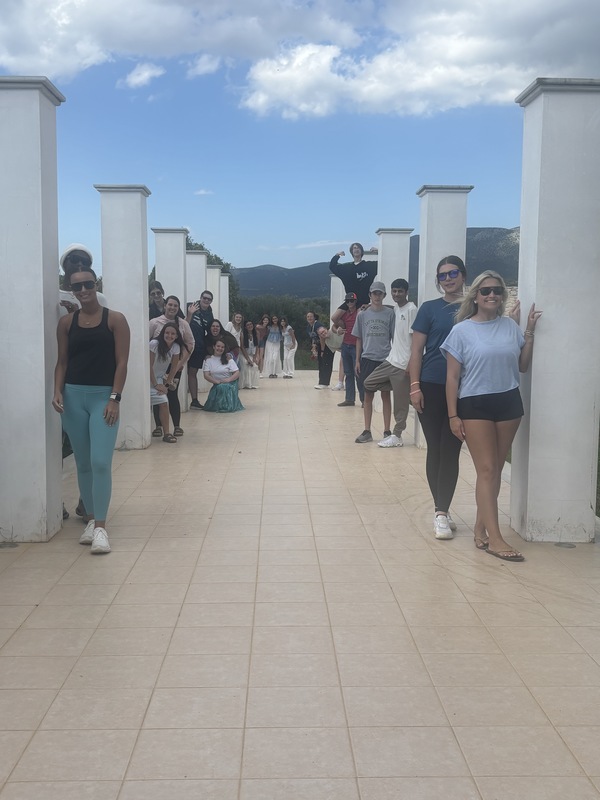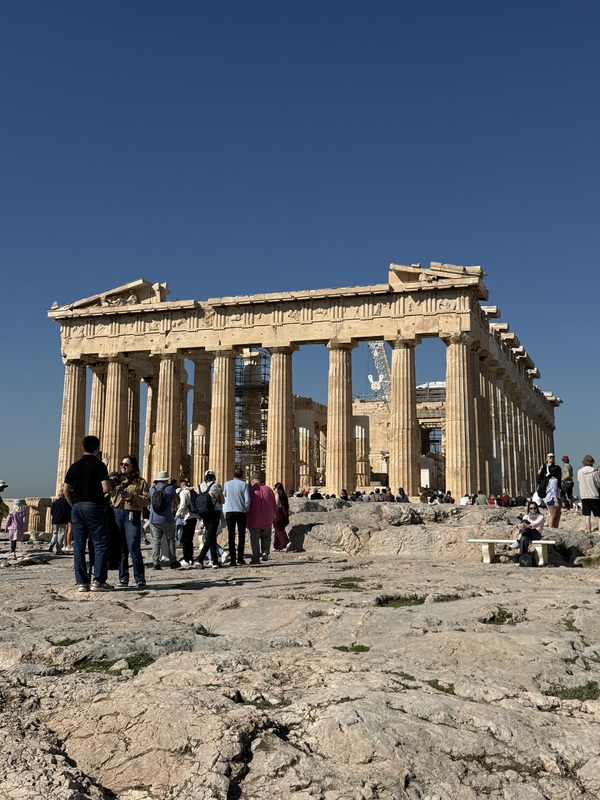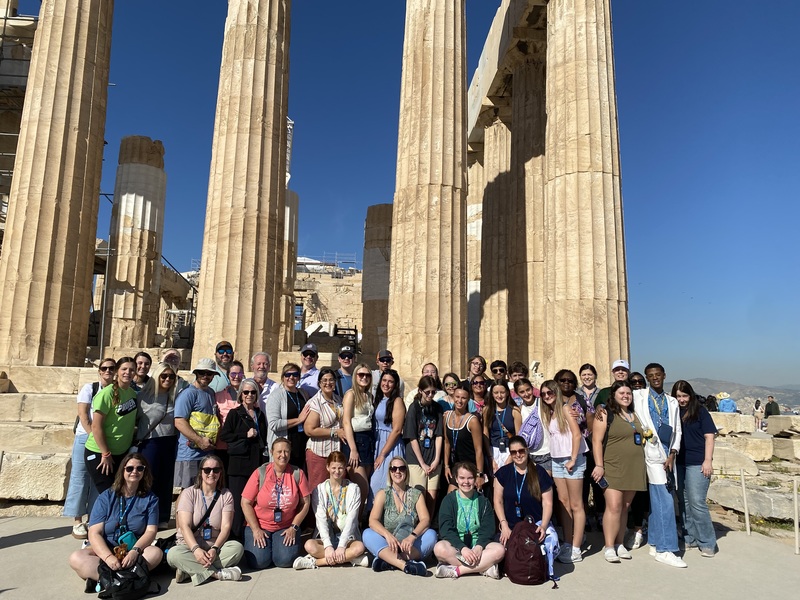
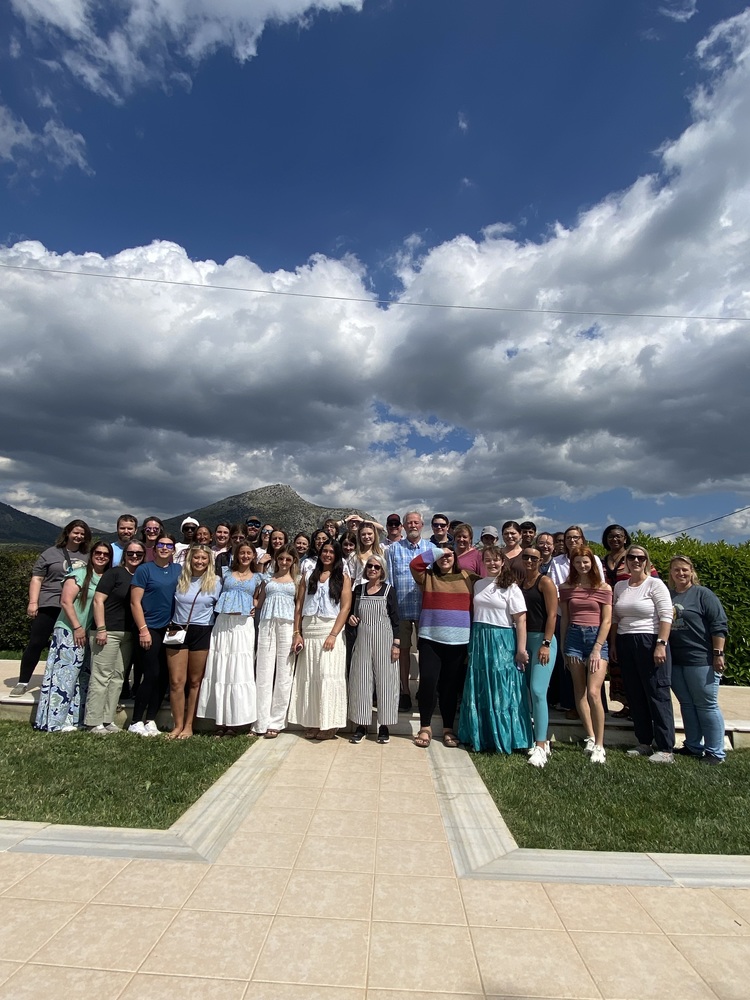
During Spring Break 2026, 42 Vikings (21 students and 21 adults) embarked on the trip of a lifetime to Greece. They traveled to Athens where they explored the Parthenon and other features of the Acropolis, including Mars Hill where the apostle Paul gave a sermon, and took a walking tour of the ancient city. Students were amazed at the juxtaposition of modern buildings and pillars of ancient temples. Many were in awe to be standing on locations that have existed for millennia.
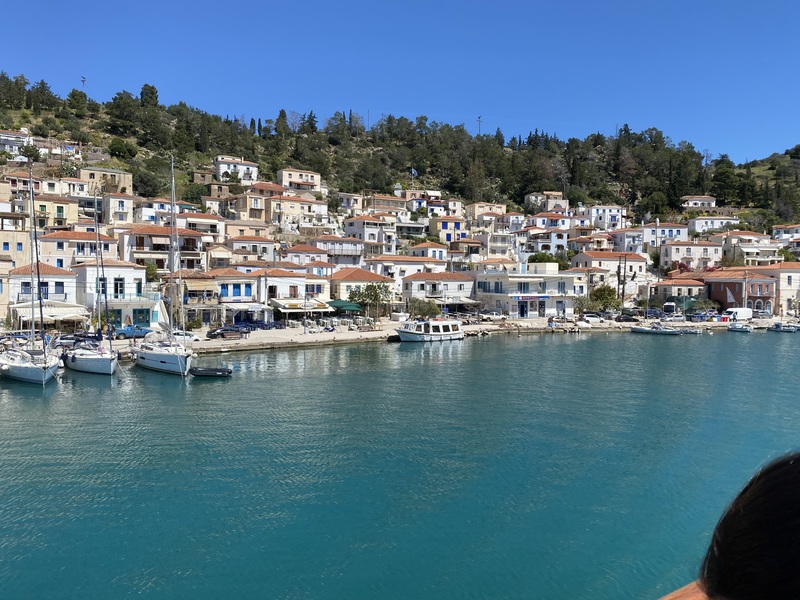
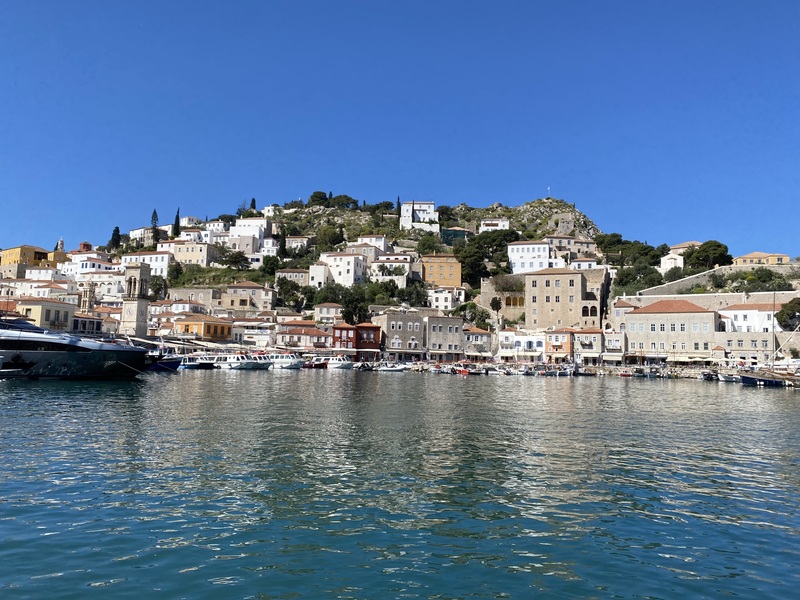
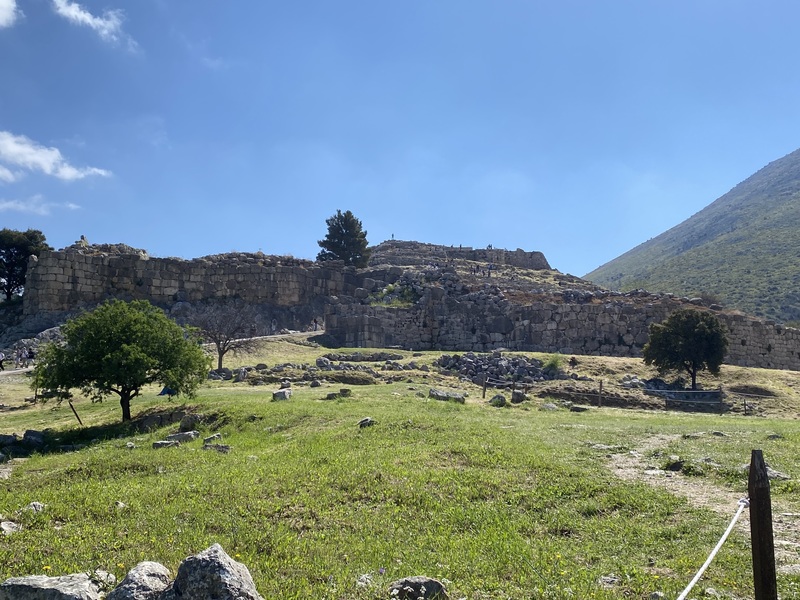
We also took a Saronic Islands cruise to three islands – Hydra, Poros, and Aegina. Students were able to see red-tiled roofs, blue Aegean waters, and sample local delicacies such as gelato, baklava, and pistachios. These islands were absolutely breathtaking. We left Athens and traveled to the Peloponnese region to explore the ancient ruins of Mycenae, a well-preserved site showcasing the lives of ancient residents. We also visited Nafplio, a charming seaside town and explored an ancient fortress.
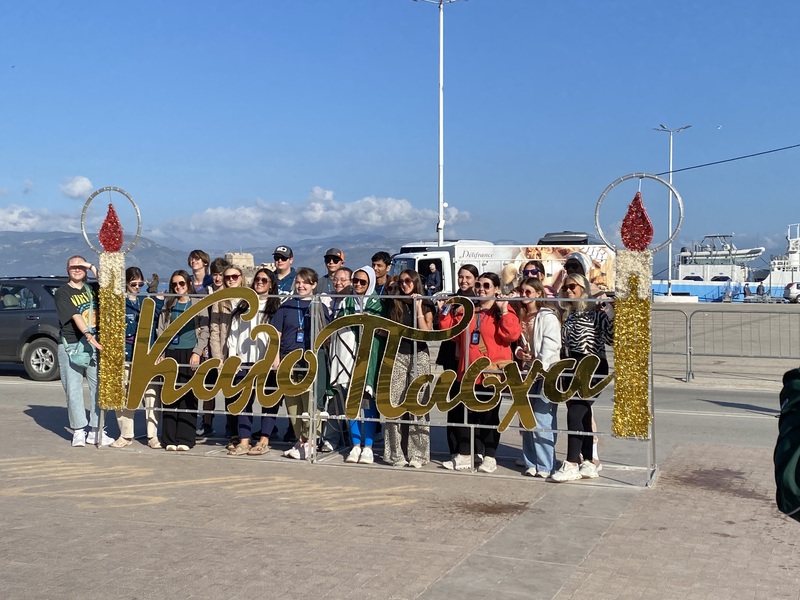
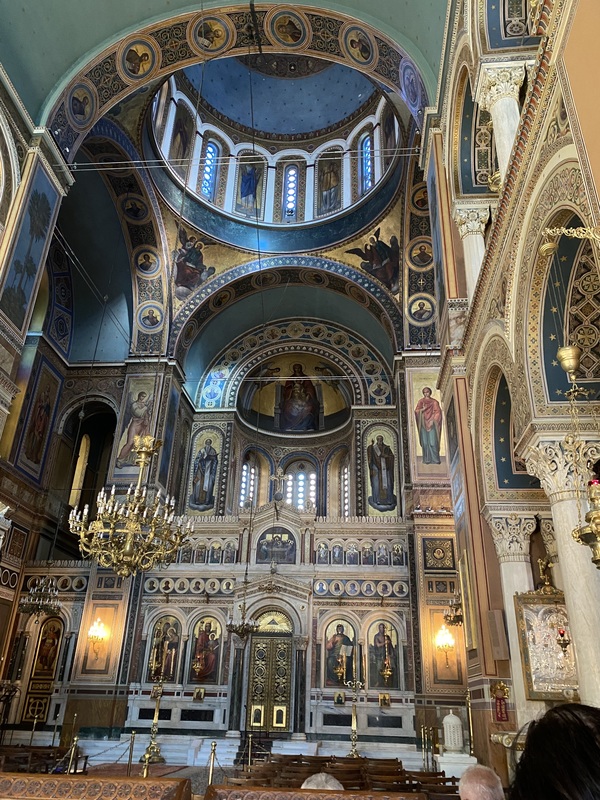
We visited during Holy Week for the Greek Orthodox church and were able to visit churches and witness some important rituals. Our tour guide, who was fabulous, arranged for our group to be a part of the Good Friday procession. This was a priceless peek into another culture.
Travel is important because it allows us to see beyond our small little corner of the world. Our traveling Vikings, many who had never traveled internationally before, fully embraced the opportunity to learn about a different culture. They tried new foods, learned new things, and realized that even though there are differences, we are all really more similar than we are different.
We’re not sure where we’re headed next, but we know there will be more trips. We hope you will join us on our next adventure!